
The financial advice profession faces an unprecedented marketing challenge. While licensed advisers have formal qualifications, regulatory oversight, and fiduciary duties, they are losing the race for consumer attention to financial influencers, or “finfluencers”, who utilise social media’s power to foster trust through relatability and accessibility. However, the latest Australian Financial Advice Landscape Report (AFLR 2025) shows that innovative practices are successfully closing this gap, with digital marketing channels seeing a 56% increase in client acquisition effectiveness.
The Trust Paradox: Why Consumers Choose Influence Over Expertise
Academic research underscores the trust advantage that finfluencers hold over traditional advisers. Their 'relatable, accessible, and diverse content' resonates with younger and more digitally engaged audiences, a factor that has been challenging for traditional advisers to address (Chetan & Pandey, 2025).
Relatability and Accessibility dominate the finfluencer advantage. These content creators “use informal, engaging, and personal storytelling on social media, making financial topics feel approachable and less intimidating compared to the formal, jargon-heavy style of traditional advisers” (Anderson & Chalmers, 2025). The research shows this approach “democratises financial knowledge and appeals especially to Gen Z and Millennials, who value quick, relatable advice over formal consultations.”
Diversity and Representation create deeper connections. Research indicates that “finfluencers reflect a broader range of backgrounds, genders, and ethnicities than the predominantly white, male professional adviser sector” (Ben-Shmuel et al., 2024). This diversity allows consumers to identify with content creators who share their backgrounds, increasing receptivity and trust, particularly among underrepresented groups.
Perceived Value Alignment resonates with modern consumers who view traditional financial institutions as “outdated, inaccessible, or misaligned with the values of younger consumers.” At the same time, finfluencers appear “more transparent, community-oriented, and aligned with the fast, convenient, and values-driven preferences of digital natives” (Hayes & Ben-Shmuel, 2024).
The Professional Advantage: Leveraging Regulatory Credibility
Despite the appeal of finfluencers, their influence carries significant limitations. Research highlights that “finfluencers often lack formal qualifications and regulatory oversight, raising concerns about misinformation and risky recommendations” (Singh & Sarva, 2024). Their trustworthiness is frequently “based more on perceived authenticity and relatability than on verified expertise.”
The AFLR 2025 data confirms that traditional referral channels remain dominant, with existing clients driving 81% of new business growth (up from 71%), followed by accountants at 45%. However, the report’s most significant finding is that digital channels now generate new clients for 25% of practices—a 56% increase from 16% in previous surveys. This growth underscores the increasing expectation among consumers for professional advisers to maintain a digital presence and accessibility.
Strategic Marketing Solutions: The Professional-Digital Integration Model
Leading practices are successfully combining professional credibility with digital accessibility. The AFLR 2025 reveals that tech-savvy practices achieve profit margins of up to 40%, compared to 18% for less technology-focused competitors. These practices leverage specific strategies that advisers can implement immediately.
Deploy AI-Powered Content Marketing
The AFLR 2025 data shows that the future of marketing is AI-powered. 56% of advisers recognise AI’s impact on marketing, particularly on social media, while 61% see AI enhancing client engagement through newsletter production and content creation. This forward-thinking use of AI is not about replacing human interaction, but enhancing it. By automating routine content creation, advisers can focus on high-value client interactions while maintaining a consistent digital presence. This is the future of marketing, a future full of potential and opportunity.
These practices automate routine content creation, allowing advisers to focus on high-value client interactions while maintaining a consistent digital presence. The key is to use AI to enhance, rather than replace, the personal touch that clients value in professional relationships.
Implement Strategic Client Targeting Through Digital Analytics
The AFLR 2025 data reveals that 57% of practices are now pursuing purposeful growth strategies, with larger practices (five or more advisers) showing an 80% focus on targeting specific client types, compared to 54% of solo practices. This strategic focus is not just a trend; it is a necessity. Leading practices are utilising client analytics to identify ideal prospects and create targeted digital content that addresses their particular needs and concerns directly. This targeted approach is not only effective but it is also essential for success in the digital age.
This targeted approach generates measurably better results: practices using advanced client analytics report 15% higher revenue per client and improved retention rates compared to traditional segmentation methods.
Build Professional Social Proof Through Adviser Ratings Profiles
One thing we have observed is that claimed Adviser Ratings profiles receive eight times more page views than unclaimed profiles, with the platform generating “thousands of leads annually” for participating advisers. Matt Hale from Rising Tide reports that his Adviser Ratings profile “allows prospective clients to get real-world feedback & social proof from existing client,”. Contributing to the platform’s “Ask an Adviser” series, which provides “invaluable” content for his social media presence.
Consumer advice leads growth since 2020: Adviser Ratings Platform
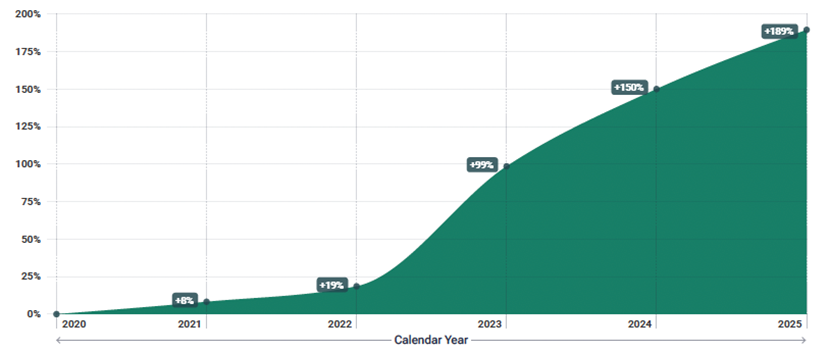
Advisers can invite client reviews which wield significant power by acting as social proof, influencing purchase decisions, boosting trust, and providing advisers with valuable free marketing and customer insights. In fact, 90% of consumers check reviews before connecting.
Content Strategy: Professional Authority Meets Digital Accessibility
The academic research shows that finfluencers succeed through “humor, personal narratives, and interactive content” that builds “parasocial relationships, fostering a sense of authenticity and emotional connection.” Professional advisers can adapt these techniques while maintaining regulatory compliance and professional standards.
Educational Storytelling replaces jargon-heavy explanations with client success stories and real-world examples. Instead of explaining superannuation contribution limits, share how a client’s strategic contributions enabled early retirement. This approach maintains professional accuracy while improving accessibility and relatability. However, if you are going to go into the details, James Wrigley provides an excellent example here of how to “make it relatable”.
Values-Based Positioning addresses the perception that traditional advisers are disconnected from consumer values. Highlight your commitment to client outcomes, transparency, and ethical practice through content that demonstrates these values rather than merely declaring them. Share your decision-making process, explain fee structures clearly, and showcase how your advice aligns with clients’ life goals.
Interactive Digital Experiences move beyond static content to engage audiences actively. Use polls to gauge audience interest in topics, host live Q&A sessions on common financial questions, and create interactive calculators that provide immediate value while capturing leads.
Implementation Framework: From Strategy to Results
If you decide to start building out a social media presence, you can do it one of two ways: throw mud at the wall and see what sticks, or plan it out. If you plan to plan, in Phase One, begin by claiming and optimising your Adviser Ratings profile with detailed information about your specialisations and incorporating video content. Connect your social media accounts to facilitate automated review sharing, and utilise AI tools to enhance content creation and client engagement. Moving into Phase Two, focus on developing an educational content calendar that addresses client concerns rather than just product features. Create videos that explain complex concepts through simple analogies and real-world examples, and develop interactive tools and calculators that deliver immediate value to prospects. In Phase Three, participate in Adviser Ratings’ “Ask an Adviser” series to establish thought leadership, actively engage with prospect questions via social media and professional platforms, and host virtual educational seminars on topics relevant to your target demographics.
Measuring Success: Analytics That Matter
The AFLR 2025 reveals that data-driven practices consistently outperform competitors across key metrics, including profitability, efficiency, and growth. Track meaningful indicators, including lead generation from digital channels, conversion rates from social media engagement, and client acquisition costs across different marketing channels.
Monitor engagement metrics that indicate genuine interest rather than vanity metrics like follower counts. Focus on time spent viewing content, questions generated from posts, and appointment requests following digital interactions.
The Competitive Imperative: Acting on Professional Advantage
The research reveals a critical window of opportunity. While finfluencers capture attention through accessibility and relatability, they cannot provide comprehensive financial planning, regulatory protection, or fiduciary responsibility. Professional advisers who combine digital accessibility with regulatory credibility position themselves to capture both immediate consumer interest and long-term client relationships.
The AFLR 2025 data confirms this opportunity: practices embracing digital marketing strategies achieve significantly higher profitability while maintaining professional standards. Tech-savvy practices operate with 55% fewer staff per adviser while serving more clients effectively—an efficiency gain that creates sustainable competitive advantage.
Conclusion: The Future Belongs to Digital-First Professionals
The competitive landscape between finfluencers and traditional advisers is not about choosing between professional credibility and digital accessibility—it is about combining both effectively. The AFLR 2025 data demonstrates that practices successfully integrating digital marketing with professional expertise achieve superior business outcomes while better serving client needs.
The Finfluencer challenge has revealed consumer expectations for accessible and engaging financial content. Professional advisers who meet these expectations while leveraging their unique advantages in expertise, regulation, and fiduciary responsibility will capture the growing market of consumers seeking both accessibility and security in their financial guidance.
Success requires immediate action, as digital channels become increasingly important for client acquisition. Practices that delay digital integration risk losing market share to both finfluencers and more digitally savvy competitors. However, advisers who implement strategic digital marketing while maintaining professional standards can build sustainable competitive advantages that benefit both their practices and their clients.
The necessary tools, platforms, and strategies are available today. The question is not whether to compete with finfluencers—it is how quickly professional advisers can implement digital strategies that showcase their unique value proposition to an increasingly digital-first consumer market.
References
If you would like to read more about this topic, here are some excellent papers to dive into.
Anderson, E., & Chalmers, D. (2025). The Shifting Locus of Authoritative Advice for Gen-Z and Their Financial Lives: An Opportunity for the Credit Union Sector?. https://doi.org/10.36399/gla.pubs.349744
Ben-Shmuel, A., Hayes, A., & Drach, V. (2024). The Gendered Language of Financial Advice: Finfluencers, Framing, and Subconscious Preferences. Socius, 10. https://doi.org/10.1177/23780231241267131
Chetan, & Pandey, A. (2025). Exploring The Rise of Finfluencers Over Financial Advisors: A Shift in Financial Guidance. International Journal For Multidisciplinary Research. https://doi.org/10.36948/ijfmr.2025.v07i04.52758
Hayes, A., & Ben-Shmuel, A. (2024). Under the finfluence: Financial influencers, economic meaning-making and the financialization of digital life. Economy and Society, 53, 478–503. https://doi.org/10.1080/03085147.2024.2381980
Singh, S., & Sarva, M. (2024). The Rise of Finfluencers: A Digital Transformation in Investment Advice. Australasian Business, Accounting and Finance Journal. https://doi.org/10.14453/aabfj.v18i3.14
Article by:
Comments0